

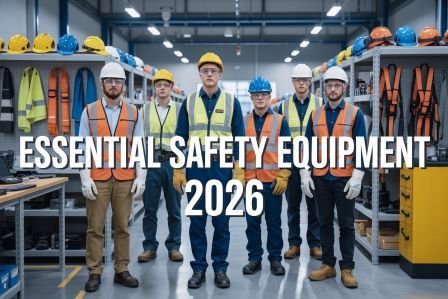
Industrial workers face more safety challenges than ever before, and having the right protective equipment can mean the difference between going home safely or ending up in the hospital. This guide covers the top 10 safety equipment every industrial worker should have in 2026, designed for frontline workers, safety managers, and supervisors who want to stay ahead of workplace hazards.
You’ll discover the latest advances in head and eye protection that guard against everything from flying debris to chemical splashes. We’ll break down respiratory protection systems that keep dangerous particles and gases out of your lungs, especially in confined spaces and chemical processing areas. You’ll also learn about cutting-edge personal gas detection devices that alert you to invisible threats before they become deadly, plus emergency communication equipment that ensures help can reach you when seconds count.
Essential Head and Eye Protection Equipment

Advanced Smart Hard Hats with Impact Sensors
The traditional safety helmet has undergone a remarkable transformation with cutting-edge technology integration. Smart hard hats now feature built-in impact sensors that instantly detect and record collision events, providing real-time data about potential head injuries. These innovative head protection safety helmets connect to mobile apps and safety management systems, alerting supervisors when a worker experiences a significant impact.
Modern smart helmets like the upgraded versions of the reliable 3M H-701 Hard Hat series incorporate IoT connectivity, GPS tracking, and environmental monitoring capabilities. The impact sensors can differentiate between normal work activities and actual safety incidents, reducing false alarms while ensuring genuine emergencies receive immediate attention.
Key features include:
- Automatic incident reporting to safety teams
- Real-time location tracking for emergency response
- Temperature and humidity monitoring
- Integrated LED lighting systems
- Extended battery life lasting full work shifts
These advanced personal protective equipment PPE solutions prove especially valuable in high-risk environments where workers operate heavy machinery or work at elevated heights. The data collected helps safety managers identify hazardous areas and improve workplace safety protocols for industrial workers.


Anti-Fog Safety Glasses with UV Protection
Eye protection has evolved beyond basic safety glasses to address common workplace challenges that compromise vision clarity. Anti-fog safety glasses incorporate advanced coating technologies that maintain clear vision in varying temperature and humidity conditions, eliminating the dangerous practice of removing protective eyewear to wipe away condensation.
These glasses feature hydrophilic and hydrophobic coatings that prevent moisture buildup while providing comprehensive UV protection against harmful solar radiation. The dual-lens technology creates a thermal barrier that prevents fogging even during strenuous physical activities or when transitioning between different environmental conditions.
Professional-grade anti-fog safety glasses offer:
- Wraparound designs for peripheral protection
- Adjustable temple lengths and nose bridges
- Scratch-resistant polycarbonate lenses
- Impact resistance meeting ANSI Z87.1 standards
- Interchangeable lens options for different lighting conditions
Workers in welding, chemical processing, and outdoor construction benefit significantly from these enhanced eye protection systems. The UV protection becomes particularly important for industrial workers exposed to arc flash, intense artificial lighting, or extended outdoor work periods.
Face Shields for Chemical and Particle Defense
Face shields provide comprehensive facial protection that safety glasses alone cannot deliver, creating a physical barrier against chemical splashes, flying particles, and biological contaminants. These essential safety equipment pieces for industrial workers have become increasingly sophisticated, offering better clarity, comfort, and protection coverage.
Modern face shields feature optically clear polycarbonate or acetate windows that resist chemical degradation and maintain transparency even after exposure to harsh industrial environments. The ergonomic headgear systems distribute weight evenly, reducing neck strain during extended wear periods.
Advanced face shield systems include:
- Quick-release mechanisms for emergency removal
- Anti-static properties to prevent particle attraction
- Multiple adjustment points for secure fitting
- Compatibility with other workplace safety gear
- Replaceable protective films for easy maintenance
Chemical processing facilities, laboratories, and metalworking operations require face shields that meet specific industry standards. Some models incorporate ventilation systems that prevent heat buildup while maintaining protection integrity. The combination of face shields with safety glasses creates a comprehensive eye and face protection system that addresses multiple hazards simultaneously.
Industrial facilities often specify face shields with specific chemical resistance ratings based on the substances present in their work environments, ensuring workers receive appropriate protection against both immediate and long-term exposure risks.


Respiratory Protection Systems for Hazardous Environments

N95 and P100 Filtering Facepiece Respirators
N95 respirators serve as the frontline defense against airborne particles in most industrial settings. These personal protective equipment PPE devices filter out at least 95% of airborne particles, including dust, mold, and other non-oil-based contaminants. Industrial workers in construction, manufacturing, and mining environments rely heavily on these respiratory protection masks for daily operations.
P100 respirators take protection to the next level, capturing 99.97% of particles including oil-based aerosols. These advanced filtering systems prove essential in environments with metalworking fluids, paint spray operations, and chemical processing facilities. The P100 designation means workers can trust this equipment against virtually all particulate hazards.
| Respirator Type | Filtration Efficiency | Best Use Cases | Typical Duration |
|---|---|---|---|
| N95 | 95% non-oil particles | General construction, dust exposure | 8 hours typical use |
| P100 | 99.97% all particles | Chemical plants, spray painting | Single shift or contamination |
Workers should replace disposable respirators when breathing becomes difficult, when the device becomes damaged, or after manufacturer-recommended time limits. Proper fit testing ensures maximum protection effectiveness.
Full-Face Air-Purifying Respirators
Full-face air-purifying respirators provide comprehensive protection by covering the entire face while filtering contaminated air through replaceable cartridges. These systems protect eyes, nose, mouth, and respiratory tract simultaneously, making them invaluable workplace safety gear 2026 for chemical handling and hazardous material operations.
The key advantage lies in their versatility – different cartridge types handle specific contaminants like organic vapors, acid gases, ammonia, or particulates. Workers can quickly swap cartridges based on changing workplace conditions without replacing the entire respirator.
Comfort features include anti-fog coatings, speaking diaphragms for clear communication, and adjustable head straps for extended wear. Modern designs reduce weight while maintaining seal integrity, allowing workers to perform detailed tasks without compromising protection.
Regular maintenance involves cleaning the facepiece, replacing cartridges according to manufacturer schedules, and conducting pre-use inspections. Workers must store these respirators properly to prevent damage to sealing surfaces and optical components.
Powered Air-Purifying Respirators for Extended Use
Powered air-purifying respirators (PAPRs) use battery-operated blowers to pull air through filtration systems, delivering clean air to workers through hoses and headpieces. This active airflow creates positive pressure inside the breathing zone, preventing contaminant infiltration even if minor seal leaks occur.
These systems excel during extended work periods because the powered airflow reduces breathing resistance significantly. Workers experience less fatigue compared to negative-pressure respirators, making PAPRs ideal for long shifts in contaminated environments.
PAPR configurations include tight-fitting full facepieces, loose-fitting hoods, and helmets with face shields. Hood and helmet options work well for workers with facial hair who cannot achieve proper seal with traditional respirators. Battery life typically ranges from 8-12 hours, covering full work shifts.
Industrial applications include pharmaceutical manufacturing, asbestos abatement, lead paint removal, and pesticide application. The combination of eye protection, respiratory protection, and head coverage makes PAPRs extremely versatile safety solutions.


Self-Contained Breathing Apparatus for Emergency Situations
Self-contained breathing apparatus (SCBA) systems provide the ultimate respiratory protection by supplying clean air from pressurized tanks, completely independent of ambient air quality. Emergency response teams, confined space workers, and fire safety personnel depend on SCBA equipment for life-threatening situations.
Emergency scenarios requiring SCBA include chemical spills, oxygen-deficient spaces, unknown atmospheric conditions, and immediate danger to life and health (IDLH) environments. These situations exceed the capabilities of any air-purifying system.
Modern SCBA units feature lightweight composite cylinders, heads-up displays showing air supply remaining, and integrated communication systems. Essential safety equipment industrial workers in emergency response roles must train regularly on SCBA operation, including emergency procedures for air sharing and escape protocols.
Maintenance requirements are strict due to life-safety applications – regular pressure testing, valve inspections, and breathing air quality verification ensure reliability when seconds count. Workers need proper training on donning procedures, air conservation techniques, and emergency escape methods.
Hand and Arm Protection Solutions

Cut-Resistant Gloves with Touchscreen Compatibility
Modern cut-resistant gloves have transformed how industrial workers protect their hands while maintaining productivity. These hand protection gloves industrial settings require now feature ANSI/ISEA cut levels ranging from A1 to A9, with most industrial applications requiring A3 or higher protection. The latest 2026 models incorporate high-performance polyethylene (HPPE) fibers blended with glass fiber or steel wire, delivering exceptional cut resistance without compromising dexterity.
Touchscreen compatibility has become essential as workers increasingly use tablets, smartphones, and digital interfaces on job sites. The conductive fingertips use specialized materials that maintain electrical conductivity while preserving cut resistance. Look for gloves with silver-coated fibers or copper-infused thread in the fingertips.
| Cut Level | Applications | Touchscreen Compatibility |
|---|---|---|
| A3-A4 | General handling, light metalwork | Standard on most models |
| A5-A6 | Glass handling, sheet metal | Available with premium coating |
| A7-A9 | Sharp blade work, heavy fabrication | Limited models available |
Chemical-Resistant Nitrile and Neoprene Gloves
Chemical exposure remains one of the most serious hazards industrial workers face daily. Nitrile gloves excel in petroleum-based environments, offering superior resistance to oils, fuels, and most organic solvents. The 2026 generations feature enhanced formulations that resist punctures up to 40% better than previous models while maintaining tactile sensitivity.
Neoprene gloves provide broader chemical resistance, particularly against acids, bases, and alcohols. They’re ideal for workers handling cleaning chemicals, hydraulic fluids, or working in laboratories. The double-dipped construction creates multiple barrier layers, extending glove life significantly.
Personal protective equipment PPE standards require proper chemical compatibility testing. Always check permeation rates and breakthrough times specific to your chemicals. Many manufacturers now provide QR codes linking to detailed chemical resistance databases.
Key selection criteria include:
- Thickness: 4-8 mil for light work, 8-15 mil for heavy exposure
- Cuff length: Standard 9-inch or extended 12-inch protection
- Texture patterns: Diamond grip for wet conditions, smooth for precision work
- Powder-free options: Essential for food processing and clean room environments
Heat-Resistant Gloves for High-Temperature Operations
High-temperature work demands specialized protection that goes beyond standard workplace safety gear 2026 requirements. Heat-resistant gloves now use advanced materials like Kevlar, Nomex, and PBI blends that maintain flexibility even at extreme temperatures. Contact heat protection ranges from 400°F for light welding to over 2000°F for molten metal handling.
The most significant advancement involves multi-layer construction combining different protective materials. The outer shell provides heat resistance, middle layers offer insulation, and inner linings wick moisture while preventing heat transfer. This layered approach maintains hand mobility while ensuring safety.
Steam and liquid splash protection requires different considerations than dry heat resistance. Look for gloves with sealed seams and extended cuffs when working around hot liquids or steam systems. The latest models incorporate cooling gel inserts that activate when exposed to heat, providing additional thermal protection for extended wear periods.
Anti-Vibration Gloves for Power Tool Users
Prolonged exposure to hand-arm vibration can cause permanent nerve damage and circulation problems. Anti-vibration gloves specifically designed for power tool users incorporate specialized padding systems that absorb and dissipate vibrational energy before it reaches workers’ hands.
The most effective designs use viscoelastic materials strategically placed across palm and finger zones where vibration transfer occurs. ISO 10819 standards measure vibration reduction across different frequency ranges, with quality gloves reducing transmission by 20-60% depending on frequency.
Modern anti-vibration gloves balance protection with grip strength and dexterity. Silicone palm patches enhance tool grip without adding bulk, while breathable back materials prevent excessive sweating during extended use. The 2026 models feature smart materials that stiffen under vibration while remaining flexible during normal handling tasks.
Workers using jackhammers, grinders, sanders, or chain saws should prioritize gloves with proven vibration reduction certificates. Regular replacement every 3-6 months ensures continued protection as the dampening materials compress with use.


Foot Protection and Mobility Safety

Steel-Toe Boots with Slip-Resistant Soles
Steel-toe boots remain the gold standard for industrial worker safety equipment, protecting feet from falling objects, compression injuries, and impact damage. Modern steel-toe designs have evolved significantly, incorporating lightweight alloy alternatives like aluminum and composite materials that offer comparable protection with reduced weight. The toe cap must meet ASTM F2413 standards, providing protection against impacts up to 75 pounds and compression forces up to 2,500 pounds.
Slip-resistant soles are equally critical, especially in environments with oil, water, or chemical spills. Look for boots with deep tread patterns, specialized rubber compounds, and multi-directional grip designs. The best slip-resistant soles feature coefficients of friction exceeding 0.5 on both wet and dry surfaces. Vibram and similar high-performance sole manufacturers offer proven traction technologies that significantly reduce workplace slip and fall incidents.
When selecting steel-toe boots, prioritize comfort features like moisture-wicking linings, cushioned midsoles, and proper arch support. Many workers spend 8-12 hours on their feet daily, making comfort essential for maintaining safety awareness and productivity.
Electrical Hazard Protection Footwear
Electrical hazard (EH) rated footwear provides crucial protection for workers exposed to electrical circuits and equipment. EH-rated boots must withstand 18,000 volts of electricity at 60 Hz for one minute with no current flow exceeding 1.0 milliampere. This protection helps prevent electrical shock when workers accidentally contact live electrical sources.
EH protection works through specialized sole construction using non-conductive materials like rubber or specific polymer compounds. The entire sole assembly must maintain electrical resistance, including the heel area. Regular inspection of EH footwear is vital because worn soles, punctures, or contamination can compromise electrical protection.
Industries requiring EH protection include electrical utilities, construction, manufacturing, and maintenance operations. Workers should verify their footwear meets both ASTM F2412 and F2413 EH standards. Remember that EH protection only works when soles remain clean and intact – oil, moisture, or wear can reduce effectiveness.
Puncture-Resistant Insoles and Boots
Puncture-resistant footwear protects against sharp objects penetrating through the sole, preventing serious foot injuries from nails, metal shards, glass, and other debris. Traditional puncture protection used steel plates, but modern alternatives include lightweight materials like Kevlar, ballistic nylon, and flexible polymers that offer superior comfort without sacrificing protection.
ASTM F2413 requires puncture-resistant soles to withstand a minimum force of 270 pounds applied through a specified nail without penetration. Advanced puncture-resistant designs distribute impact forces across the entire sole area, reducing pressure points and improving walking comfort.
Flexible puncture-resistant materials conform better to foot contours compared to rigid steel plates, reducing fatigue during long work shifts. These materials also resist corrosion and maintain flexibility in temperature extremes. Construction workers, waste management personnel, and manufacturing employees working around sharp materials benefit most from puncture-resistant protection.
| Feature | Steel Protection | Composite Protection |
|---|---|---|
| Weight | Heavy | 30-40% lighter |
| Metal Detection | Triggers alarms | Airport/security friendly |
| Temperature | Cold conductivity | Better insulation |
| Flexibility | Rigid | More flexible |
| Durability | Very high | High |


Fall Protection Equipment and Harness Systems

Full-Body Safety Harnesses with Quick-Connect Buckles
Modern fall protection harness systems have transformed workplace safety for industrial workers operating at heights. Full-body harnesses distribute impact forces across the torso, shoulders, and thighs rather than concentrating stress on a single point. The latest 2026 models feature quick-connect buckles that eliminate the guesswork of proper adjustment while ensuring secure fitting every time.
These advanced harnesses incorporate lightweight materials like high-strength polyester webbing and aluminum hardware that won’t corrode in harsh industrial environments. Quick-connect buckles allow workers to don and doff the harness in under 30 seconds, dramatically improving compliance rates. The buckles feature color-coded systems and audible clicks that confirm proper engagement.
Key features to look for include padded shoulder straps, breathable back panels, and tool attachment points. D-rings positioned at the dorsal (back) and sternal (chest) locations provide multiple attachment options for different work scenarios. Premium models offer sizing ranges from small to 3XL with micro-adjustments for perfect fit across diverse body types.
Retractable Lanyards and Shock-Absorbing Systems
Retractable lanyards represent the gold standard in personal fall arrest technology. These devices automatically extend and retract as workers move, providing constant protection without restricting mobility. The internal spring mechanism maintains slight tension on the lifeline, preventing dangerous slack that could increase fall distances.
Modern shock-absorbing lanyards incorporate energy dissipation technology that limits fall arrest forces to under 1,800 pounds – well below the maximum safe threshold for human tolerance. The shock absorber deploys during a fall event, tearing through specially designed webbing or deforming metal components to absorb kinetic energy gradually.
Essential features include:
- Automatic locking mechanisms that engage within inches of a fall
- Weather-resistant housing rated for temperature extremes
- Integrated swivel connections preventing lifeline twisting
- Visual fall indicators showing when replacement is required
- Working lengths from 6 feet to 85 feet depending on application
Workers should inspect retractable lanyards before each use, checking for housing damage, lifeline wear, and proper retraction speed.
Temporary Anchor Points and Fall Arrest Systems
Temporary anchor points solve the challenge of fall protection in areas lacking permanent tie-off structures. These portable systems must withstand minimum 5,000-pound loads in any direction while remaining lightweight enough for easy installation by single workers.
Beam clamps represent the most versatile temporary anchor solution, adapting to I-beams, C-channels, and structural steel ranging from 3 to 15 inches wide. The latest designs feature captive hardware preventing dropped bolts and tool-free installation requiring no specialized training.
Popular temporary anchor types:
- Concrete anchors: Chemical adhesive systems for permanent installations
- Vacuum anchors: Suction-cup technology for smooth surfaces like glass or metal panels
- Counterweight systems: Portable bases using sandbags or water ballast
- Clamp-on anchors: Universal designs for pipes, railings, and structural members
Mobile anchor carts provide fall protection for large work areas, featuring weighted bases on wheels that workers can reposition as needed. These systems excel in warehouse environments, aircraft maintenance, and building construction where work locations change frequently.
Safety Nets for Construction and Maintenance Work
Safety nets serve as the last line of defense when personal fall arrest systems aren’t practical or sufficient. Construction crews working on multi-story buildings, bridge maintenance teams, and industrial facility workers benefit from properly installed net systems that catch falling workers and debris.
Modern safety nets use high-tenacity polypropylene or nylon materials tested to withstand 17,500-pound impact loads. The mesh openings measure precisely 36 square inches maximum, preventing workers from falling through while allowing debris clearance. Border ropes feature energy-absorbing properties that distribute impact forces across multiple attachment points.
Net installation requirements:
- Maximum 30-foot fall distance from work surface to net
- Net extends minimum 8 feet beyond work edge in all directions
- Testing with 400-pound drop bag before worker occupancy
- Weekly inspections for cuts, abrasions, or UV damage
- Professional installation by certified riggers
Debris nets protect ground-level workers and pedestrians from falling tools, materials, and construction waste. These fine-mesh barriers attach below work areas, catching objects as small as bolts and washers before they reach dangerous velocities.


High-Visibility Clothing and Reflective Gear

Class 3 High-Vis Vests with LED Integration
The highest level of visibility protection comes from Class 3 high-visibility clothing and reflective gear, designed for workers operating in extreme risk environments. These advanced vests feature significantly more reflective material than their Class 1 and Class 2 counterparts, providing 360-degree visibility that’s essential for highway work, airport operations, and heavy construction sites.
Modern Class 3 vests now incorporate LED strip technology that enhances visibility during low-light conditions and nighttime operations. These battery-powered LED systems can run for up to 80 hours on a single charge and offer multiple lighting modes including steady illumination, slow flash, and rapid strobe patterns. The LED strips are typically positioned along the reflective tape paths, creating an active light source that catches attention from distances exceeding 500 meters.
Smart features in 2026 models include motion sensors that automatically activate the LED system when movement is detected, helping preserve battery life while ensuring workers remain visible during active periods. Some vests also feature Bluetooth connectivity, allowing safety supervisors to monitor worker locations and ensure compliance with visibility protocols through mobile applications.
The vest construction uses moisture-wicking materials with antimicrobial treatments, addressing comfort concerns during extended wear. Breakaway designs prevent entanglement hazards while maintaining the integrity of the safety features.
Flame-Resistant High-Visibility Workwear
Workers in petrochemical, electrical, and welding environments need high visibility clothing industrial workers can trust that also provides flame resistance. These specialized garments combine ANSI/ISEA 107 visibility standards with NFPA 2112 flame-resistant requirements, creating dual protection that doesn’t compromise either safety feature.
The fabric technology uses inherent flame-resistant fibers rather than chemical treatments that can wash out over time. These materials self-extinguish when the ignition source is removed and won’t melt or drip onto the skin, preventing severe burn injuries. The reflective tape used on these garments undergoes special flame-resistant treatments that maintain visibility properties even after exposure to high temperatures.
Key features include:
- Arc rating protection up to 12 cal/cm² for electrical work
- Reinforced stress points at seams and high-wear areas
- Multiple pocket configurations for tool storage and communication devices
- Comfort stretch panels in critical movement areas
- Tag-free designs to prevent skin irritation during long shifts
The color options extend beyond traditional orange and lime to include navy blue and red variants that maintain high visibility while meeting industry-specific color requirements. These garments require special care procedures to maintain both flame resistance and visibility properties, with specific washing instructions that preserve the integrity of both safety features.
Reflective Hard Hat Stickers and Accessories
Hard hat customization with reflective materials significantly improves head-level visibility, especially important for crane operators and equipment managers who need to identify workers from elevated positions. High-quality reflective stickers use prismatic technology that reflects light back to its source with minimal light loss, maintaining visibility even when viewed from extreme angles.
Strategic placement patterns maximize effectiveness:
| Location | Purpose | Visibility Distance |
|---|---|---|
| Front and back | Directional identification | 150+ meters |
| Sides | Peripheral visibility | 100+ meters |
| Top | Overhead visibility | 75+ meters |
Modern reflective accessories include LED clip-on units that attach directly to hard hat slots, providing active lighting without compromising the helmet’s protective integrity. These units feature impact-resistant housing and can withstand the same drop tests as the hard hats themselves.
Specialty reflective tape designed for curved surfaces conforms to hard hat contours without peeling or lifting at edges. The adhesive systems maintain bonding strength despite temperature fluctuations, UV exposure, and chemical contact common in industrial environments. Some advanced options include photoluminescent materials that absorb ambient light and continue glowing for hours after light sources are removed, providing visibility during power outages or equipment failures.
Regular inspection and replacement schedules ensure these accessories maintain their reflective properties, as environmental exposure can degrade performance over time.


Hearing Protection for Noise Control

Foam and Silicone Earplugs for Different Noise Levels
Foam earplugs remain the most popular choice for hearing protection industrial workers rely on daily. These lightweight, disposable options expand inside the ear canal, creating an effective barrier against harmful noise levels. Quality foam plugs reduce noise by 25-33 decibels, making them perfect for environments with moderate to high noise exposure like manufacturing floors or construction sites.
Silicone earplugs offer superior comfort for extended wear periods. Unlike foam varieties that can cause ear fatigue after several hours, silicone plugs maintain their shape without expanding pressure. They’re reusable, making them cost-effective for workers who need consistent protection. Many industrial facilities stock both types to accommodate different worker preferences and specific job requirements.
When selecting earplugs, consider the Noise Reduction Rating (NRR) carefully. Different workplace safety gear 2026 standards require specific protection levels based on measured decibel exposure. Workers in foundries or heavy machinery operations need higher NRR ratings compared to office environments adjacent to production areas.
Electronic Noise-Cancelling Earmuffs
Electronic earmuffs represent a significant advancement in personal protective equipment PPE technology. These devices actively monitor ambient sound levels and automatically adjust protection accordingly. When dangerous noise spikes occur, the electronics instantly shut down, providing maximum hearing protection.
The real advantage comes during normal conversation periods. Workers can communicate clearly with supervisors and colleagues without removing their protection. This feature dramatically improves workplace safety by maintaining clear communication channels while preserving hearing health.
Battery life typically ranges from 200-400 hours of continuous use. Many models include low-battery indicators and auto-shutoff features to prevent unexpected protection gaps. Some advanced units connect to two-way radios or smartphone systems for enhanced workplace coordination.
| Feature | Standard Earmuffs | Electronic Models |
|---|---|---|
| Noise Reduction | 20-30 dB | 20-30 dB |
| Communication | Blocked | Clear |
| Battery Life | N/A | 200-400 hours |
| Cost | $15-40 | $80-300 |
Custom-Molded Hearing Protection Devices
Custom-molded devices provide the ultimate in comfort and protection for long-term industrial use. Created from individual ear impressions, these devices offer perfect fit and superior noise isolation. The molding process involves taking precise measurements of each worker’s ear canal, ensuring optimal comfort during 8-12 hour shifts.
Professional audiologists or trained safety specialists typically handle the fitting process. The initial investment is higher than standard options, but the durability and comfort make them cost-effective over time. Many custom devices last 3-5 years with proper care and cleaning.
Advanced custom options include filtered versions that allow certain frequencies through while blocking harmful noise levels. This selective protection enables workers to hear important warning signals, machinery changes, or emergency alerts while maintaining protection against damaging sound levels.
Communication-Enabled Hearing Protection Systems
Modern industrial environments demand sophisticated communication capabilities without compromising hearing protection. Communication-enabled systems integrate radio connectivity, Bluetooth pairing, and voice amplification into traditional hearing protection designs.
These systems allow workers to receive radio communications, phone calls, and emergency broadcasts directly through their hearing protection. Voice clarity remains excellent even in extremely noisy environments, thanks to advanced noise-canceling microphone technology and digital signal processing.
Integration with existing workplace communication infrastructure is typically seamless. Most systems support standard two-way radio frequencies and can connect to facility-wide communication networks. This connectivity proves especially valuable in emergency situations where clear communication can prevent accidents and coordinate response efforts effectively.
Battery management becomes important with communication-enabled systems. Quick-charging capabilities and backup power options ensure continuous protection and communication availability throughout entire work shifts.
Personal Gas Detection and Monitoring Devices

Single-Gas Detectors for Specific Hazards
Single-gas detectors serve as your first line of defense against specific toxic or combustible gases in industrial environments. These compact, portable devices focus on detecting one particular gas with exceptional accuracy and sensitivity. Carbon monoxide detectors remain the most common type, protecting workers in confined spaces, parking garages, and areas with combustion equipment. Hydrogen sulfide detectors prove essential in petroleum refineries, wastewater treatment plants, and paper mills where this deadly gas can accumulate quickly.
Oxygen deficiency monitors protect against asphyxiation risks in confined spaces, storage tanks, and areas where inert gases might displace breathable air. Methane detectors keep workers safe around natural gas lines, landfills, and mining operations. Modern single-gas units feature loud audible alarms, bright visual alerts, and vibrating notifications to ensure workers receive warnings even in noisy environments.
Battery life typically ranges from 12-24 months with newer lithium-ion technology, while calibration requirements vary from monthly to semi-annual depending on the specific gas being monitored. Many models include data logging capabilities that track exposure levels over time, helping safety managers identify hazardous trends and improve workplace safety protocols.
Multi-Gas Monitors for Comprehensive Coverage
Multi-gas monitors revolutionize personal protective equipment PPE by detecting multiple hazardous gases simultaneously through a single device. These sophisticated instruments typically monitor the “big four” gases: combustible gases (LEL), oxygen levels, carbon monoxide, and hydrogen sulfide. This combination covers the most common gas hazards found across various industrial settings.
Advanced models can detect up to six different gases, including ammonia, sulfur dioxide, chlorine, and other specific workplace hazards. The sensors work independently, providing real-time readings for each gas type while maintaining alarm thresholds specific to each hazard. Workers receive immediate alerts when any gas reaches dangerous levels, allowing for quick evacuation or corrective action.
Modern multi-gas monitors feature rugged construction to withstand drops, water exposure, and extreme temperatures common in industrial environments. Color displays show gas concentrations, battery status, and alarm conditions clearly. Wireless connectivity enables real-time data transmission to central monitoring stations, creating a comprehensive safety network across large facilities.
Bump testing and calibration procedures ensure accurate readings throughout the device’s lifespan. Most units require monthly bump tests and quarterly calibrations using certified gas mixtures. Some models feature automatic calibration reminders and lockout functions that prevent use when calibration is overdue.
Wireless Gas Detection with Real-Time Alerts
Wireless gas detection systems transform traditional personal monitoring into connected safety networks that protect entire work teams simultaneously. These devices communicate through Wi-Fi, cellular, or mesh networks to share gas readings with supervisors, safety personnel, and nearby workers in real-time. When one detector triggers an alarm, the entire network receives instant notifications, enabling coordinated emergency responses.
Cloud-based monitoring platforms allow safety managers to track multiple workers across different locations from a single dashboard. GPS integration shows exactly where gas hazards are detected, helping emergency responders reach affected areas quickly. Historical data analysis identifies patterns and potential problem areas before they become dangerous.
Peer-to-peer communication between devices creates automatic safety zones where workers receive warnings when approaching areas with detected gas hazards. Man-down alerts use motion sensors and positioning data to trigger emergency notifications if a worker becomes incapacitated. Some systems integrate with existing plant safety systems, automatically shutting down equipment or activating ventilation when gas levels exceed safe thresholds.
Battery optimization in wireless models balances continuous communication with extended operational time. Smart power management adjusts transmission frequency based on gas readings and worker movement patterns. Charging stations and battery swap programs keep devices operational during long shifts without compromising safety coverage.


Emergency Communication and Location Equipment

Two-Way Radios with Emergency Alert Functions
Modern two-way radios have evolved far beyond basic communication devices, becoming critical lifelines for industrial workers. These advanced systems come equipped with emergency alert buttons that instantly broadcast distress signals to supervisors and safety teams when activated. The latest models feature GPS integration, allowing responders to pinpoint exact locations within seconds of an emergency call.
Digital radio systems offer superior audio clarity in noisy industrial environments, ensuring clear communication even over heavy machinery noise. Many units include man-down detection technology that automatically triggers alerts if a worker becomes immobilized or experiences a sudden impact. Battery life has improved significantly, with some models lasting up to 30 hours on a single charge, making them reliable for extended shifts and remote operations.
Programmable channels allow different departments to maintain dedicated communication lines while keeping emergency frequencies open for critical situations. Weather-resistant designs ensure functionality in harsh industrial conditions, from chemical exposure to extreme temperatures.
Personal Locator Beacons for Remote Work Areas
Personal locator beacons (PLBs) serve as essential backup communication systems for workers operating in isolated areas where traditional communication networks may fail. These compact devices transmit distress signals directly to search and rescue satellites, providing global coverage regardless of cellular tower availability.
Modern PLBs feature integrated GPS technology that transmits precise coordinates along with emergency signals, dramatically reducing search and rescue response times. Many units include two-way messaging capabilities, allowing trapped or injured workers to communicate their condition and specific needs to rescue teams.
Battery life typically ranges from 5-10 years in standby mode, with activated devices providing 24-48 hours of continuous emergency transmission. Waterproof and impact-resistant housings protect the devices from industrial hazards, while compact designs allow for comfortable carrying on tool belts or safety harnesses.
Some advanced models include fall detection sensors that automatically activate if a worker experiences a significant impact or remains motionless for predetermined periods. This feature proves invaluable for lone workers who may become unconscious or unable to manually trigger emergency alerts.
Smartphone Apps for Safety Check-Ins and Alerts
Smartphone applications have revolutionized workplace safety communication, offering versatile platforms for regular check-ins and emergency notifications. These apps typically feature customizable check-in intervals, requiring workers to confirm their safety status at predetermined times. Missed check-ins automatically trigger escalating alert protocols to supervisors and safety teams.
Real-time location sharing allows safety managers to track worker movements and identify potential hazard zones. Many apps include photo and voice messaging capabilities, enabling workers to document safety concerns or report hazardous conditions with visual evidence.
Emergency activation features can be triggered through various methods, including panic buttons, voice commands, or automatic triggers based on device movement patterns. Some applications integrate with existing company safety systems, providing seamless data flow between different monitoring platforms.
Offline functionality ensures continued operation in areas with poor cellular coverage, storing critical data until network connectivity returns. Push notifications deliver instant alerts to designated personnel, while detailed reporting features help organizations analyze safety trends and improve protocols.
Lone Worker Monitoring Systems
Comprehensive lone worker monitoring systems combine multiple technologies to create robust safety networks for isolated employees. These systems typically integrate wearable devices, smartphone apps, and centralized monitoring stations to provide continuous oversight of worker safety.
Advanced monitoring systems use artificial intelligence to analyze worker behavior patterns and identify potential emergencies before they escalate. Motion sensors detect falls, sudden impacts, or extended periods of inactivity, automatically triggering emergency protocols when abnormal conditions occur.
Scheduled check-in protocols require workers to confirm their safety status at regular intervals, with missed check-ins generating immediate alerts to supervisors. Two-way communication capabilities allow monitoring personnel to contact workers directly to verify their condition or provide emergency guidance.
Geofencing technology creates virtual safety boundaries, alerting supervisors when workers enter restricted areas or fail to remain within designated safe zones. Environmental monitoring sensors can detect hazardous gas levels, temperature extremes, or other dangerous conditions, providing early warnings to both workers and safety teams.
Integration with existing industrial safety equipment creates comprehensive protection networks where all devices work together to maximize worker safety. Cloud-based data storage ensures reliable access to safety information from multiple locations, supporting coordinated emergency response efforts across different sites and time zones.


Portable Safety Equipment and First Aid Essentials

Personal First Aid Kits with Trauma Supplies
Industrial workers face unique hazards that require specialized first aid preparation beyond basic bandages and antiseptic wipes. Modern personal protective equipment PPE extends to comprehensive trauma kits designed for serious workplace injuries. These kits should contain heavy-duty gauze pads, hemostatic agents for controlling severe bleeding, and emergency tourniquets that can be applied single-handedly.
The 2026 standard for workplace safety gear includes trauma shears capable of cutting through thick work clothing and safety equipment, compressed gauze for deep wound packing, and chest seals for puncture injuries. Each kit needs multiple sizes of pressure bandages, medical tape that adheres in dirty conditions, and disposable gloves rated for chemical resistance.
Smart first aid kits now feature QR codes linking to video demonstrations of emergency procedures, making them valuable even for workers without medical training. Some kits include instant cold packs with extended duration cooling and thermal blankets for shock treatment. Weight and portability matter – the best kits balance comprehensive supplies with easy belt or vest mounting.
Consider kits with waterproof cases and foam inserts that keep supplies organized and accessible during high-stress situations. The most effective trauma kits include instruction cards with clear diagrams showing pressure point locations and proper tourniquet placement techniques.


Emergency Eyewash Stations and Portable Units
Chemical splashes and debris impact represent serious threats to vision in industrial environments. Fixed eyewash stations work well in manufacturing areas, but portable units provide crucial protection for mobile workers and remote job sites. Modern portable eyewash bottles deliver 15 minutes of continuous flow, meeting ANSI Z358.1 standards while weighing under three pounds when full.
Industrial worker safety equipment now includes pressurized eyewash units that maintain consistent flow rates regardless of bottle orientation. These units use preserved saline solution with extended shelf life and tamper-evident seals. The best portable systems feature wide-mouth bottles for easy refilling and ergonomic triggers that workers can operate while keeping both eyes open under running solution.
Gravity-fed portable stations offer higher capacity for situations involving multiple workers or extended flushing requirements. These units typically hold 16 gallons and can be wall-mounted or placed on portable stands. They include built-in alarms that sound when activation occurs, alerting nearby personnel to assist.
Personal eyewash bottles should be part of every worker’s essential safety equipment. Single-use bottles work well for immediate response, while refillable systems prove more economical for long-term use. Look for units with flip-top caps that stay attached during use and flow restrictors that prevent waste while ensuring adequate pressure for effective flushing.


Fire Extinguishers and Suppression Tools
Different industrial hazards require specific fire suppression approaches, making portable extinguishers critical components of workplace safety gear 2026. Class A extinguishers handle ordinary combustibles, while Class B units tackle flammable liquids common in maintenance areas. Class C extinguishers work safely around electrical equipment without conducting current back to the operator.
Multi-class extinguishers provide versatility but may not perform as effectively as specialized units. ABC dry chemical extinguishers work on most fire types but leave corrosive residue that can damage sensitive equipment. Clean agent extinguishers using Halon alternatives protect electronic systems while remaining safe for occupied spaces.
Personal fire suppression tools include fire blankets rated for different temperature ranges and emergency escape breathing apparatus for smoke-filled environments. Some workers carry small aerosol extinguishers that fit in tool belts while providing quick response capability for small fires before they spread.
Modern suppression systems feature pressure gauges with color-coded zones showing charge levels at a glance. Wall brackets should allow quick removal while securing units against vibration and impact. Training requirements include hands-on practice with actual discharge, as the force and duration of spray often surprise first-time users.
Inspect extinguishers monthly for damage, proper pressure, and clear access paths. Replace units immediately after any use, even partial discharge, since compromised seals may allow pressure loss over time.


To summarise this article, watch this video
Conclusion

Industrial safety continues to evolve with new technologies and better materials, making 2026 an exciting year for worker protection. From smart hard hats with built-in sensors to advanced respiratory systems that adapt to environmental changes, the ten safety equipment categories we’ve covered represent the foundation of modern workplace protection. Each piece serves a specific purpose – protecting your head, eyes, lungs, hands, feet, and entire body from the unique hazards you face every day.
Don’t wait for an accident to happen before investing in quality safety gear. Take a look at your current equipment and see where upgrades might be needed. Your safety is worth more than cutting corners on protective gear, and the latest innovations make staying safe more comfortable and effective than ever before. Talk to your safety manager about implementing these essential tools, because going home safely to your family should never be left to chance.