


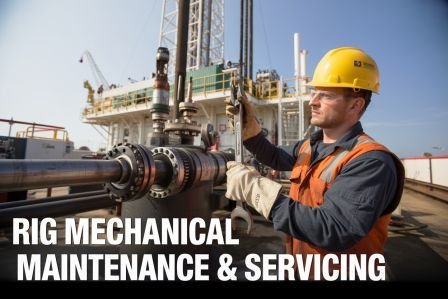
If you work on or manage an onshore drilling rig, you already know that keeping equipment running isn’t just about fixing things when they break — it’s about making sure they never break in the first place. A single mechanical failure on a rig can shut down operations, cost thousands of dollars per hour, and put people at risk. That’s why mechanical maintenance on a drilling rig is one of the most critical parts of the entire operation.
This guide is written for rig supervisors, maintenance engineers, drilling contractors, and anyone responsible for keeping oilfield equipment in top shape. Whether you’re building out a preventive maintenance schedule for the first time or looking to tighten up your team’s existing processes, there’s something here for you.
Here’s what we’ll walk through:
- Core components and lubrication practices — which parts of your rig need the most attention and how proper drilling rig lubrication practices extend equipment life
- Common mechanical failures and how to catch them early — the issues that show up most often on rigs and what your team can do before a small problem becomes a big one
- Safety protocols and the role of skilled personnel — because good maintenance isn’t just technical, it’s about having the right people following the right steps every single time
Let’s get into it.
Before you start wash this short video
Core Components Requiring Regular Mechanical Maintenance

Drawworks and Hoisting System Upkeep
The drawworks is the heart of hoisting operations, bearing enormous stress during every trip. Regular checks should cover:
- Brake assemblies – inspect linings for wear and adjust band tension
- Drum and clutch systems – look for slippage, heat buildup, or abnormal noise
- Deadline anchor and crown block sheaves – check for wire rope wear and sheave groove condition
Rotary Table and Top Drive Servicing
Both systems take constant rotational abuse. Key maintenance tasks include:
- Checking rotary table bearings and master bushing fits
- Inspecting top drive gearboxes for oil contamination and seal integrity
- Verifying swivel wash pipe packing for mud leaks
Mud Pump Inspection and Maintenance
Mud pumps run almost continuously, making them a top priority in any mechanical maintenance drilling rig program:
- Replace liner, piston, and valve assemblies on a fixed-interval schedule
- Monitor crankshaft bearings for overheating
- Inspect pulsation dampeners and pressure relief valves regularly
Power Generation and Transmission Systems
Engines, SCR systems, and drive shafts keep everything moving. Routine tasks include:
- Checking engine coolant levels, belts, and air filters
- Inspecting coupling alignments and torque converter condition
- Testing generator output voltage and load balance
Establishing an Effective Preventive Maintenance Schedule

Daily, Weekly, and Monthly Inspection Routines
A solid preventive maintenance schedule for onshore drilling rig maintenance runs on three rhythms:
| Frequency | Key Tasks |
|---|---|
| Daily | Check fluid levels, inspect hoses, review pump pressure, visual checks on hoisting equipment |
| Weekly | Lubricate bearings, test safety relief valves, inspect wire ropes and drawworks brakes |
| Monthly | Full inspection of rotary tables, top drives, mud pumps, and structural connections |
Sticking to these routines catches small issues before they become expensive shutdowns.
Using Equipment Logbooks to Track Performance
Every piece of rig equipment should have its own logbook — either paper-based or digital. Record operating hours, fluid changes, repairs, and any abnormal readings. Patterns in these logs help teams spot deteriorating components early. Good logbook discipline is one of the simplest oilfield equipment maintenance best practices that crews often overlook.
Scheduling Downtime Without Disrupting Operations
Planned downtime should align with natural operational breaks — bit trips, casing runs, or crew changes. Work with the toolpusher and operations team to map out servicing windows in advance. Short, frequent maintenance slots are far less disruptive than emergency shutdowns caused by ignored wear. Prioritize high-risk equipment first when scheduling these windows.
Critical Lubrication Practices for Rig Equipment

Selecting the Right Lubricants for Harsh Environments
Onshore drilling rigs operate under extreme heat, pressure, and contamination loads. Choosing the wrong lubricant accelerates wear and causes unexpected breakdowns. Always match lubricant viscosity and additives to:
- Temperature range of the operating environment
- Load capacity of the component (gear vs. bearing)
- Compatibility with seals and existing lubricants on-site
Synthetic greases and high-viscosity oils typically outperform conventional options in dusty, high-temperature oilfield conditions.
Proper Greasing Intervals for Rotating Components
Rotating parts like swivel bearings, rotary table components, and drawworks drums need consistent greasing schedules. A general guide:
| Component | Greasing Frequency |
|---|---|
| Rotary table bearings | Every 8–12 operating hours |
| Crown/travelling block sheaves | Daily inspection, grease weekly |
| Pump crankshaft bearings | Per manufacturer spec |
Over-greasing is just as damaging as under-greasing — it can blow seals and trap contaminants.
Avoiding Contamination in Lubrication Systems
Dirt and water are the biggest enemies of any lubrication system. Keep containers sealed, use dedicated dispensing equipment per lubricant type, and never reuse dirty funnels or rags near oil reservoirs.
Monitoring Oil Condition Through Regular Sampling
Pulling oil samples every 250–500 hours helps catch metal particles, water ingress, and viscosity breakdown early — long before a failure shows up on the rig floor.
Identifying and Addressing Common Mechanical Failures

Recognizing Early Warning Signs of Equipment Wear
Catching problems early saves time, money, and lives. Watch for these red flags during daily walkarounds:
- Unusual noises (grinding, knocking, squealing)
- Visible cracks, corrosion, or deformation on structural parts
- Unexpected drops in pressure or flow rates
- Increased fuel or fluid consumption
- Excessive heat in normally cool components
Diagnosing Hydraulic System Faults
Hydraulic failures are among the most common mechanical failures on a drilling rig. Slow cylinder response, pressure fluctuations, and fluid discoloration all point to trouble. Check seals, hose connections, and filter condition first — contaminated fluid is the root cause in most cases.
Dealing with Overheating in Mechanical Components
Overheating typically signals inadequate lubrication, blocked cooling passages, or excessive load. Verify coolant levels, clean heat exchangers regularly, and confirm that drilling rig lubrication practices are being followed correctly.
Managing Vibration-Related Damage on Drilling Equipment
Vibration loosens fasteners, fatigues metal, and damages bearings faster than almost anything else. Conduct regular torque checks and use vibration-dampening mounts where possible.
Replacing Worn Seals and Bearings Promptly
Delaying seal or bearing replacement turns a small repair into a costly breakdown. Keep critical spares on-site and replace at first sign of leakage or rough rotation — don’t wait for full failure.
Safety Protocols During Equipment Servicing

Lockout and Tagout (LOTO) Procedures for Mechanical Work
Before touching any rig equipment for servicing, energy sources must be fully isolated. LOTO procedures prevent accidental startup during mechanical maintenance on drilling rigs — a non-negotiable step that saves lives.
Key steps include:
- Identify all energy sources (electrical, hydraulic, pneumatic, mechanical)
- Isolate each source using dedicated lockout devices
- Apply personal locks and tags with technician identification
- Verify zero-energy state before starting work
- Re-energize only after all personnel are clear and locks removed
Personal Protective Equipment Requirements for Technicians
Rig maintenance safety protocols demand strict PPE compliance tailored to each task:
| Task | Required PPE |
|---|---|
| General servicing | Hard hat, safety glasses, steel-toed boots, gloves |
| Hydraulic work | Face shield, chemical-resistant gloves |
| Overhead component work | Full body harness, impact-resistant helmet |
| Grinding/cutting | Welding shield, flame-resistant coveralls |
Safe Handling of Heavy Rig Components
Drilling rig components like crown blocks, traveling blocks, and mud pump modules are extremely heavy. Safe handling requires:
- Using certified lifting slings, shackles, and rigging hardware rated for the load
- Never positioning workers under suspended loads
- Conducting pre-lift toolbox talks covering load weight, rigging points, and escape routes
- Ensuring crane operators hold current competency certifications
Role of Skilled Personnel in Rig Maintenance Success

Qualifications Required for Mechanical Technicians
Skilled personnel are the backbone of successful onshore drilling rig maintenance. Mechanical technicians working on rigs typically need:
- Certification in diesel mechanics, hydraulics, or industrial equipment
- Hands-on experience with rotating equipment, drawworks, and mud pumps
- Knowledge of API standards and OEM service manuals
- Familiarity with safety regulations specific to oilfield environments
Many operators prefer technicians holding additional credentials like CompEx certification or IWCF well control training.
Continuous Training to Keep Up with Equipment Updates
Drilling equipment evolves constantly, and technicians who stop learning quickly fall behind. Keeping skills sharp involves:
- Regular OEM-led training sessions when new equipment arrives on-site
- Refresher courses on updated drilling rig lubrication practices and torque specifications
- Cross-training across multiple equipment categories to build versatile crews
- Digital learning platforms that allow training without pulling personnel off-site
Coordination Between Maintenance and Drilling Crews
Poor communication between maintenance teams and drillers is one of the fastest ways to create costly downtime. Good coordination looks like:
- Daily handover meetings covering equipment status and pending rig equipment servicing tasks
- Shared digital maintenance logs visible to both crews
- Drilling crews reporting early warning signs rather than waiting for breakdowns
- Clear escalation paths when mechanical issues arise mid-operation
Leveraging Technology to Improve Maintenance Outcomes

Implementing Condition Monitoring Sensors on Key Equipment
Modern sensors track vibration, temperature, and pressure on critical components like drawworks, mud pumps, and top drives in real time. When readings drift outside normal ranges, crews get early warnings before small issues become expensive breakdowns — a game-changer for drilling rig maintenance technology.
Using Computerized Maintenance Management Systems
A CMMS keeps every work order, inspection record, and parts inventory in one place. Technicians can:
- Schedule recurring preventive maintenance tasks automatically
- Track equipment history to spot repeat failures
- Manage spare parts inventory to avoid costly delays
Predictive Maintenance Tools That Reduce Unexpected Failures
Predictive tools analyze sensor data trends to forecast when a component will likely fail. Common approaches include:
| Tool | Application |
|---|---|
| Vibration analysis | Rotating equipment, pump bearings |
| Thermographic imaging | Electrical panels, gearboxes |
| Oil sample analysis | Engines, transmissions |
These methods cut unplanned downtime significantly compared to run-to-failure approaches in oilfield equipment maintenance.
Remote Diagnostics for Faster Troubleshooting
Specialists off-site can now connect directly to rig control systems and review live data streams. This means faster root-cause identification, reduced need for emergency site visits, and quicker decisions about whether a repair can wait or needs immediate attention.
References and Resources

Industry Standards and Guidelines
- API RP 7L – Procedures for Inspection, Maintenance, Repair, and Remanufacture of Drilling Equipment
- API RP 54 – Occupational Safety for Oil and Gas Well Drilling and Servicing Operations
- ISO 9001 – Quality Management Systems applicable to oilfield equipment maintenance best practices
- IADC Drilling Manual – Comprehensive reference for mechanical maintenance drilling rig operations
Recommended Reading
- Drilling Engineering by J.J. Azar & G.R. Samuel – covers rig equipment servicing fundamentals
- Applied Drilling Engineering (SPE Textbook Series) – includes preventive maintenance schedule oil rig guidance
- SPE Papers on drilling rig maintenance technology and predictive maintenance systems
Online Resources and Organizations
- International Association of Drilling Contractors (IADC): iadc.org
- Society of Petroleum Engineers (SPE): spe.org
- American Petroleum Institute (API): api.org
- Occupational Safety and Health Administration (OSHA): oilfield and drilling rig maintenance safety protocols documentation
Training and Certification Resources
- IADC WellSharp – Well control and rig safety training
- OPITO Drilling Maintenance Technician certification
- Manufacturer-specific training for skilled personnel rig maintenance programs
Conclusion

Keeping an onshore drilling rig running smoothly comes down to staying on top of the basics — regular maintenance schedules, proper lubrication, quick responses to mechanical failures, and a team that actually knows what they’re doing. When these pieces work together, downtime drops, equipment lasts longer, and the job site stays safer for everyone involved.
The good news is that modern technology makes it easier than ever to catch problems before they become costly breakdowns. But no app or monitoring system replaces the value of skilled, experienced personnel who know these machines inside and out. If there’s one thing to take away, it’s this: a proactive approach to rig maintenance isn’t just about protecting equipment — it’s about protecting people and keeping operations moving without unnecessary interruptions. Start by reviewing your current maintenance schedule and identifying any gaps before they turn into bigger headaches.