


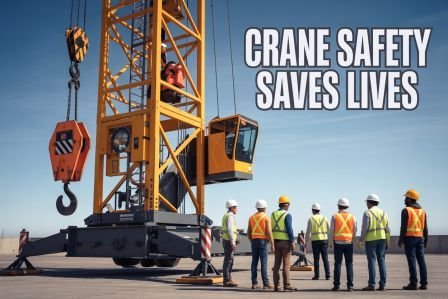
Every crane operator, safety manager, and construction supervisor knows that one overlooked safety detail can turn a routine lift into a tragic accident. The right crane safety accessories don’t just meet compliance standards—they create multiple layers of protection that keep your crew alive and your project moving forward.
This guide targets crane operators, construction safety managers, site supervisors, and rigging teams who need practical advice on essential crane safety equipment. You’ll discover the critical safety risks that put lives at danger every day on construction sites. We’ll break down the most important load block safety systems that prevent catastrophic drops and examine outrigger protection equipment that keeps cranes stable during heavy lifts.
From personal protective equipment that shields your team to emergency rescue equipment that saves lives when accidents happen, these nine crane safety accessories represent the difference between going home safely and becoming another workplace fatality statistic.
Understanding Critical Crane Safety Risks

Fatal accident statistics in crane operations
Construction sites witness approximately 42 crane-related fatalities each year in the United States alone, according to the Bureau of Labor Statistics. These numbers represent more than just statistics—they’re families devastated and companies facing severe consequences. Mobile cranes account for the majority of fatal incidents, with tower cranes following as the second most dangerous category.
The fatality rate for crane operators stands at 18.5 deaths per 100,000 workers, making it one of the most hazardous occupations in construction. What’s particularly troubling is that many of these deaths could be prevented with proper crane safety equipment and protocols. The construction industry sees crane-related injuries affecting not just operators but also ground personnel, spotters, and nearby workers.
Common causes of crane-related injuries
Crane tip-overs represent the leading cause of crane accidents, accounting for nearly 50% of all incidents. These catastrophic events often result from exceeding load capacity limits, inadequate ground conditions, or failure to properly deploy outrigger protection equipment. Contact with power lines ranks as the second most frequent cause, responsible for approximately 20% of crane-related fatalities.
Struck-by incidents occur when workers are hit by the crane boom, counterweight, or falling materials. Poor communication between crane operators and ground crews contributes significantly to these accidents. Mechanical failures, though less common, still cause serious injuries when critical components fail during operation.
Other significant causes include:
- Improper rigging procedures and inadequate crane rigging hardware
- Operator error due to insufficient training or fatigue
- Poor weather conditions and inadequate environmental monitoring
- Failure to conduct proper crane safety inspections
Legal liability for inadequate safety measures
Companies face severe legal consequences when crane accidents occur due to inadequate safety measures. OSHA violations related to crane safety carry fines ranging from $15,625 for serious violations to $156,259 for willful or repeated violations. Criminal charges may be filed against supervisors and executives when gross negligence leads to worker deaths.
Employers have a legal duty to provide proper crane safety accessories and ensure workers receive adequate training. Courts consistently hold companies liable when they fail to implement industry-standard safety protocols or skimp on essential crane operator safety gear. Insurance companies increasingly scrutinize safety programs, and inadequate measures can void coverage entirely.
Personal injury lawsuits from crane accidents often result in multi-million dollar settlements. The legal standard requires employers to provide the safest possible working environment, which includes investing in proper crane safety equipment and maintaining comprehensive safety protocols.
Financial impact of workplace incidents
The average cost of a crane-related fatality exceeds $1.4 million when accounting for legal fees, fines, increased insurance premiums, and work stoppages. Non-fatal injuries still carry substantial costs, averaging $250,000 per incident including medical expenses, lost productivity, and regulatory compliance measures.
Work stoppages following serious crane accidents can halt projects for weeks, leading to contract penalties and damaged client relationships. Companies often face difficulty securing future contracts after serious safety incidents, as clients increasingly prioritize contractors with strong safety records.
The indirect costs multiply the direct expenses. Increased insurance premiums can persist for years, while recruitment becomes more challenging when a company develops a reputation for safety problems. Investment in proper crane safety accessories and comprehensive safety programs costs significantly less than dealing with the aftermath of preventable accidents.
Load Block Safety Systems

Anti-two-blocking devices and their life-saving function
Anti-two-blocking (A2B) devices stand as one of the most critical crane safety accessories in preventing catastrophic accidents. These systems detect when the hook block or load block approaches too close to the boom head, preventing the block from being pulled into the crane’s upper structure. When two-blocking occurs, the wire rope can snap under extreme tension, causing the load to drop suddenly and potentially damaging the crane’s boom or jib.
Modern A2B systems use various detection methods, including weight-actuated switches, proximity sensors, and rope length monitoring. The most reliable systems combine multiple detection methods to ensure fail-safe operation. When the device detects an impending two-block condition, it immediately shuts down the hoist function while allowing other crane movements to continue, giving operators time to correct the situation safely.
These crane safety equipment components have prevented countless accidents across construction sites and industrial facilities. The National Institute for Occupational Safety and Health (NIOSH) reports that two-blocking incidents account for a significant percentage of crane-related fatalities, making A2B devices essential for any construction crane safety program.
Installation requires careful calibration based on the specific crane model and operating conditions. Regular testing ensures the system responds correctly to potential hazards, and operators must understand how to reset the device properly after activation.
Load moment indicators for preventing overloading
Load moment indicators (LMIs) serve as the crane operator’s digital guardian, continuously calculating the relationship between load weight and boom angle to prevent dangerous overloading conditions. These sophisticated crane operator safety gear systems monitor multiple variables simultaneously, including boom length, angle, load radius, and actual load weight to determine if the crane operates within safe parameters.
Modern LMI systems display real-time information on easy-to-read screens, showing operators their current capacity percentage and warning when approaching maximum limits. Advanced models include GPS integration for automatic crane setup verification and can store multiple crane configurations for quick switching between different boom lengths or jib combinations.
The systems typically provide three levels of warnings: caution (85% of capacity), warning (95% of capacity), and shutdown (100% of capacity). When the final limit is reached, the LMI prevents further movement in the dangerous direction while allowing safe movements to reduce the load moment.
Mobile crane safety accessories like LMIs have dramatically reduced overloading accidents, which historically caused some of the most severe crane incidents. The immediate feedback helps operators make informed decisions about load placement and crane positioning, especially when working with complex rigging hardware configurations involving wire slings and multiple pick points.
Proper calibration requires inputting accurate crane specifications and regularly updating the system with any modifications to the crane’s configuration or capacity charts.
Proper installation and maintenance requirements
Installing load block safety systems demands precision and expertise to ensure reliable operation throughout the crane’s service life. Professional installation teams must follow manufacturer specifications exactly, as improper setup can render these life-saving devices ineffective when needed most. The installation process begins with thorough documentation of the crane’s specifications, including boom lengths, capacity charts, and operating parameters.
A2B devices require careful positioning of sensors and switches to detect approaching two-block conditions accurately across all boom positions and angles. Installers must account for different wire rope diameters, block weights, and auxiliary equipment that might affect the system’s operation. Load moment indicators need precise calibration using certified test weights to ensure accurate load measurements across the crane’s entire operating range.
Regular maintenance schedules should include monthly visual inspections, quarterly functional tests, and annual comprehensive calibrations. Crane safety inspection tools help technicians verify sensor alignment, test warning systems, and confirm proper system responses. During maintenance, technicians check all electrical connections, clean sensors, and verify that backup power systems function correctly.
Documentation plays a crucial role in maintaining these systems effectively. Maintenance logs should record all tests, calibrations, and repairs, creating a comprehensive history that helps identify potential issues before they become safety hazards. Many crane accident prevention programs require these records as proof of compliance with safety regulations.
Training maintenance personnel on proper procedures ensures consistent service quality and helps extend the equipment’s operational life while maintaining peak safety performance.
Outrigger Protection Equipment

Float Pads for Enhanced Stability and Ground Protection
Float pads serve as the foundation for safe crane operations, literally. These critical crane safety accessories distribute the massive weight of mobile cranes across larger surface areas, preventing the outriggers from punching through soft ground or damaging delicate surfaces like asphalt or concrete.
Modern float pads come in various materials and designs. High-density polyethylene (HDPE) pads offer excellent durability and chemical resistance, while composite materials provide superior strength-to-weight ratios. Steel-reinforced options handle the heaviest loads but require more careful transport and positioning.
Size selection depends on ground conditions and crane specifications. Soft soil requires larger pads to spread loads effectively, while harder surfaces can work with smaller options. Most construction crane safety protocols recommend calculating pad size based on ground bearing pressure, typically ranging from 12 to 60 square feet per outrigger.
Smart float pads now include built-in load monitoring capabilities. These systems display real-time pressure readings, alerting operators when weight distribution becomes uneven or exceeds safe limits. Some advanced models integrate with crane control systems, automatically adjusting outrigger extension to maintain optimal stability.
Proper storage and inspection matter too. Cracks, chips, or excessive wear compromise safety. Many companies color-code their pads by size or capacity, making selection faster and reducing errors during setup.
Outrigger Monitoring Systems for Safe Deployment
Outrigger protection equipment has evolved from simple visual checks to sophisticated monitoring systems that provide real-time feedback on outrigger position, load, and ground contact pressure.
Electronic monitoring systems display critical information directly in the operator cab. These systems track outrigger extension length, ensuring each leg deploys to manufacturer specifications. Uneven extension creates dangerous stability conditions that monitoring systems catch before accidents happen.
Load monitoring sensors measure actual weight distribution across all outrigger points. This data helps operators identify shifting loads or ground settlement that could compromise crane stability. Advanced systems calculate and display the crane’s actual load moment, comparing it against manufacturer limits.
Ground pressure monitoring prevents outrigger penetration that could destabilize the crane. Pressure sensors in float pads or outrigger shoes transmit real-time data to the operator. When pressure exceeds safe limits, audible and visual alarms activate immediately.
Wireless technology has revolutionized outrigger monitoring. Sensors communicate with tablets or smartphones, allowing ground personnel to monitor outrigger status from safe distances. Some systems integrate with crane telematics, sending data to fleet managers and maintenance teams.
Modern mobile crane safety accessories include backup systems that continue monitoring even if primary displays fail. These redundant systems ensure operators always have access to critical stability information.
Visual Warning Devices for Pedestrian Safety
Outriggers create invisible danger zones that extend well beyond the crane’s visible footprint. Visual warning devices transform these hazardous areas into clearly marked safety zones that protect pedestrians and equipment operators.
LED warning lights mounted on outrigger assemblies provide 360-degree visibility. These lights operate continuously during crane setup and operation, creating unmistakable visual boundaries. Red lights typically indicate immediate danger zones, while amber lights mark caution areas.
Reflective tape and high-visibility paint enhance outrigger visibility during daylight hours. Chevron patterns and contrasting colors make outriggers stand out against varied backgrounds. Photoluminescent materials glow in low-light conditions without requiring power.
Barrier systems work alongside warning devices to create physical boundaries. Lightweight, portable barriers connect between outriggers, creating enclosed safety perimeters. Some barriers include integrated warning lights and audible alarms that activate when breached.
Digital signage systems display dynamic safety messages and crane status information. Solar-powered displays show load capacity, current lifting operations, and emergency contact information. These signs update automatically based on crane position and load conditions.
Crane safety equipment manufacturers now offer complete outrigger warning packages that combine multiple devices. These integrated systems ensure consistent visual messaging while simplifying installation and maintenance. Standardized warning protocols help workers recognize hazards regardless of crane manufacturer or job site location.
Motion-activated strobes provide additional warning when pedestrians approach outrigger danger zones. These battery-powered devices mount quickly to outrigger assemblies and operate for weeks without maintenance.
Operator Communication Technology

Two-way Radio Systems for Clear Coordination
Quality two-way radio systems serve as the backbone of safe crane operations. Professional-grade radios designed for construction environments offer crystal-clear communication between crane operators, signal persons, and ground crews. These crane safety accessories must withstand harsh jobsite conditions including dust, moisture, and impact while maintaining reliable signal strength.
Digital radio systems provide superior audio quality compared to analog alternatives, reducing miscommunication that can lead to accidents. Look for radios with noise-canceling features and VOX (voice-activated) capabilities that allow hands-free operation. Battery life becomes critical during extended work shifts, so choose models offering 12+ hours of continuous use.
Emergency channels and group communication features enable instant alerts across entire crane teams. Some advanced systems include GPS tracking and man-down alerts, adding extra safety layers for crane operator safety gear protocols.
| Feature | Basic Models | Professional Models |
|---|---|---|
| Range | 1-2 miles | 3-5+ miles |
| Battery Life | 8 hours | 12-16 hours |
| Weather Rating | IP54 | IP67/68 |
| Emergency Features | Basic | GPS, Man-down alerts |
Hand Signal Standardization and Training Tools
Visual communication remains essential when radio systems fail or noise levels prevent clear audio transmission. OSHA-compliant hand signal charts and training materials ensure all team members understand standardized crane operation signals. These construction crane safety tools include laminated reference cards, wall posters, and interactive training modules.
Professional training programs combine classroom instruction with hands-on practice sessions. Signal persons must demonstrate proficiency in all standard hand signals before certification. Training materials should cover:
- Basic directional signals (up, down, left, right)
- Load positioning commands
- Stop and emergency signals
- Equipment-specific signals for different crane types
- Night operation light signals
Regular refresher training keeps skills sharp and introduces new team members to established protocols. Many companies use video-based training systems that can be deployed across multiple jobsites simultaneously.
Electronic Communication Backup Systems
Backup communication systems provide redundancy when primary radio networks fail. These crane safety equipment solutions include cellular-based communication apps, satellite communication devices, and light-based signaling systems for emergency situations.
Smartphone apps designed for crane operations offer messaging capabilities with read receipts, ensuring critical information reaches intended recipients. These systems work particularly well for coordinating multi-crane projects where traditional radio channels become congested.
Wireless intercom systems integrated into operator cabs and ground stations provide direct point-to-point communication independent of radio frequencies. Some models include recording capabilities for incident investigation and training purposes.
Emergency beacon systems activate automatically during crane malfunctions, broadcasting distress signals to rescue teams and nearby equipment operators. These systems prove invaluable during nighttime operations or in remote locations where immediate help might not be readily available.
Personal Protective Equipment for Crane Teams

High-visibility safety vests and hard hats
When working around massive construction cranes, being seen can literally mean the difference between life and death. High-visibility safety vests aren’t just bright fashion statements – they’re engineered to catch attention in the most demanding environments. Look for vests that meet ANSI Class 2 or Class 3 standards, featuring reflective tape that maintains visibility in low-light conditions. The fluorescent colors work during daylight hours, while retroreflective striping ensures visibility when vehicle headlights hit the material.
Hard hats protect against falling objects, which pose constant threats on crane work sites. Modern crane safety equipment includes hard hats with four-point suspension systems that distribute impact forces more effectively than traditional designs. Choose helmets rated for electrical hazards if your crew works near power lines, and consider models with integrated communication systems for better coordination between crane operators and ground personnel.
| Safety Feature | Benefit | ANSI Standard |
|---|---|---|
| Reflective Striping | Night visibility | ANSI 107 |
| Impact Resistance | Head protection | ANSI Z89.1 |
| Electrical Rating | Power line safety | Class E |
Fall protection harnesses for elevated work
Crane operations often require workers to perform tasks at dangerous heights, making fall protection harnesses absolutely critical crane safety accessories. Full-body harnesses distribute fall forces across stronger body areas like the chest, pelvis, and thighs, reducing injury severity compared to body belts that concentrate forces at the waist.
Professional-grade harnesses feature multiple attachment points for different work scenarios. The dorsal D-ring handles most fall arrest situations, while chest and side D-rings provide positioning options for specific tasks. Quick-connect buckles speed up donning and doffing while maintaining security, and padding reduces pressure points during extended wear.
Self-retracting lifelines (SRLs) work perfectly with these harnesses, automatically adjusting to worker movement while instantly locking during falls. Choose SRLs rated for your specific fall clearance requirements, considering the total stopping distance needed to prevent ground impact.
Cut-resistant gloves for rigging operations
Rigging operations expose hands to steel cables, chains, and sharp edges that can cause severe lacerations. Cut-resistant gloves rated Level A4 or A5 provide excellent protection against these hazards while maintaining the dexterity needed for precise rigging work. Modern materials like ultra-high molecular weight polyethylene (UHMWPE) offer superior cut protection without the bulk of traditional materials.
Look for gloves with reinforced palms and fingertips where wear typically occurs first. Nitrile coatings improve grip in wet conditions, while touchscreen-compatible fingertips allow operation of mobile devices without removing gloves. Proper fit is crucial – loose gloves reduce dexterity and can catch on equipment, while tight gloves restrict blood flow and cause fatigue.
Safety footwear with slip-resistant soles
Construction sites around cranes present multiple slip and trip hazards, from mud and debris to oil spills and uneven surfaces. Safety footwear must provide reliable traction while protecting feet from crushing injuries and puncture wounds. Steel-toe boots meeting ASTM F2413 standards protect against compression forces up to 2,500 pounds and impacts of 75 foot-pounds.
Slip-resistant outsoles use specialized rubber compounds and tread patterns designed for construction environments. Deep lugs channel away liquids and debris, while wider heel areas provide stability on uneven surfaces. Puncture-resistant midsoles protect against nails, metal shards, and other sharp objects that commonly litter crane work areas.
Electrical hazard protection becomes essential when working near overhead power lines or electrical equipment. EH-rated boots provide secondary protection against electrical shock, though they should never be considered primary electrical safety equipment.
Rigging Hardware and Inspection Tools

Certified Slings and Shackles for Secure Lifting
When it comes to crane rigging hardware, certified slings and shackles serve as the backbone of safe lifting operations. These critical crane safety accessories must meet stringent industry standards to handle the tremendous forces involved in heavy lifting. Wire rope slings remain the most common choice for their durability and load capacity, but synthetic slings offer advantages in specific applications where weight reduction and flexibility matter.
Shackles act as the crucial connection points between rigging components, and using certified hardware isn’t just recommended—it’s essential. Each shackle should display its working load limit (WLL) clearly stamped on the body, along with manufacturer identification and certification marks. Bow shackles excel in multi-directional loading situations, while straight shackles work best for in-line pulls.
Regular inspection of these rigging components reveals potential issues before they become dangerous. Look for wire rope slings showing broken wires, corrosion, or crushing damage. Synthetic slings require checking for cuts, burns, or UV degradation. Shackles need examination for cracks, excessive wear on pins, or deformation of the body. Replace any compromised equipment immediately—the cost of new rigging hardware pales compared to accident consequences.
Proper storage extends the life of crane rigging hardware significantly. Keep slings off the ground, away from chemicals, and protected from extreme temperatures. Document each component’s service history to track usage patterns and schedule replacements appropriately.
Load Testing Equipment for Regular Verification
Load testing equipment ensures your crane safety equipment performs reliably when lives depend on it. Hydraulic load blocks and water bags provide controlled testing environments that simulate real-world lifting conditions without the unpredictability of actual loads. These tools verify that cranes operate within their rated capacities and identify potential mechanical issues before they cause catastrophic failures.
Digital load cells offer precise measurement capabilities that older mechanical systems cannot match. Modern load testing systems integrate with crane management software to maintain detailed records of each test, creating an invaluable database for safety compliance and maintenance planning. Wireless load monitoring systems provide real-time feedback during testing procedures, allowing operators to make immediate adjustments if readings fall outside acceptable parameters.
Testing frequencies depend on crane usage patterns and regulatory requirements. High-use mobile cranes typically require monthly load tests, while overhead cranes in manufacturing facilities might need quarterly verification. Environmental factors like exposure to corrosive chemicals or extreme temperatures may necessitate more frequent testing schedules.
Calibrated test weights serve specific purposes in crane safety inspection protocols. These precision-manufactured weights verify load measurement accuracy and help identify drift in electronic systems. Regular calibration of testing equipment itself ensures measurement reliability throughout the testing process.
Rigging Inspection Checklists and Documentation
Comprehensive rigging inspection checklists transform subjective observations into standardized safety protocols. These documents guide crane teams through systematic examinations of every rigging component, from hooks and blocks to specialized lifting attachments. Digital inspection forms streamline data collection while ensuring nothing gets overlooked during pre-lift safety checks.
Mobile inspection apps revolutionize how teams document crane safety equipment conditions. Photo integration allows inspectors to capture visual evidence of wear patterns, damage, or proper installations. GPS tagging links inspection data to specific job sites, creating valuable trends analysis for equipment performance across different environments. Cloud-based storage ensures inspection records remain accessible for regulatory audits and maintenance planning.
Daily inspection protocols cover basic visual checks that operators perform before each shift. Weekly inspections dive deeper into mechanical components and require more technical expertise. Monthly comprehensive inspections involve detailed measurements and may require specialized testing equipment. Annual certifications typically mandate third-party inspectors with specific qualifications.
Documentation systems must balance thoroughness with practicality. Overly complex paperwork discourages compliance, while insufficient detail fails to capture critical safety information. Successful programs use standardized terminology and clear pass/fail criteria that eliminate guesswork from inspection decisions. Training programs ensure all team members understand inspection requirements and documentation standards, creating consistent safety practices across different crews and job sites.
Environmental Safety Monitoring

Wind Speed Indicators for Weather-Related Decisions
Wind conditions pose one of the most dangerous threats to crane operations. Crane safety equipment must include reliable wind measurement tools to prevent catastrophic accidents. Most crane manufacturers specify maximum wind speeds for safe operation, typically ranging from 20-35 mph depending on the crane type and load configuration.
Digital anemometers provide real-time wind speed readings and should be mounted at multiple points – ground level, boom tip, and operator cab. These devices often feature alarm systems that alert operators when wind speeds approach dangerous thresholds. Advanced models store data for documentation and can integrate with crane control systems to automatically halt operations during unsafe conditions.
Weather stations with wireless connectivity allow operators to monitor approaching storms and make informed decisions about continuing work. Many construction sites now use portable weather monitoring systems that track wind gusts, sustained speeds, and directional changes throughout the day.
Ground Conditions Assessment Tools
Unstable ground conditions cause numerous crane accidents annually. Construction crane safety protocols require thorough ground assessment before any lifting operations begin. Ground-penetrating radar helps identify underground utilities, voids, or soft soil conditions that could compromise crane stability.
Soil bearing pressure indicators and ground mats work together to distribute crane loads safely. Load moment indicators should connect to outrigger monitoring systems to alert operators if ground settlement occurs during operations. Digital inclinometers detect even minor changes in crane level that might indicate ground failure.
Moisture meters help assess soil conditions after rain or in areas with poor drainage. Compaction testing equipment ensures proper ground preparation, while portable scales verify proper counterweight placement on uneven terrain.
Overhead Hazard Detection Systems
Power lines, buildings, and other overhead obstacles create deadly hazards for crane operators. Crane safety accessories like proximity warning systems use radar or electromagnetic field detection to alert operators when the boom approaches dangerous areas.
Modern systems provide both audible and visual warnings, with some models capable of automatically stopping boom movement when preset distances are reached. GPS-based systems map overhead hazards and provide continuous position awareness relative to known obstacles.
Laser range finders offer precise distance measurements to overhead hazards, while boom angle indicators help operators maintain safe clearances. These tools work best when combined with comprehensive site surveys and hazard marking systems.
Lighting Equipment for Low-Visibility Operations
Poor visibility dramatically increases crane accident risks. Crane operator safety gear must include adequate lighting systems for dawn, dusk, and nighttime operations. LED light towers provide broad area illumination while consuming less power than traditional lighting systems.
Boom-mounted LED arrays illuminate the load path and landing zone, while operator cab lighting ensures instrument visibility without creating glare. Emergency lighting systems with battery backup maintain critical illumination during power failures.
Strobing warning lights alert ground personnel to crane movement, while laser guide systems help operators position loads accurately in low-light conditions. All lighting systems should include backup power sources and regular maintenance schedules to ensure reliability when needed most.
![Nightstick XPR-5592GX [Zone 0] Intrinsically Safe Rechargeable Sc...](data:image/svg+xml;base64,PHN2ZyB4bWxucz0iaHR0cDovL3d3dy53My5vcmcvMjAwMC9zdmciIHZpZXdCb3g9IjAgMCAxIDEiIGJ2LWltZy11cmw9Imh0dHBzOi8vbS5tZWRpYS1hbWF6b24uY29tL2ltYWdlcy9JLzMxdVMwS05ZN01MLl9BQ18uanBnIj48L3N2Zz4=)


Emergency Response and Rescue Equipment

First Aid Kits Specifically Designed for Crane Sites
Standard first aid kits don’t cut it when you’re dealing with crane operations. These massive machines create unique injury scenarios that require specialized medical supplies and equipment. Crane safety accessories should include comprehensive first aid systems designed for the specific hazards present on construction sites with overhead cranes and mobile lifting equipment.
Specialized crane site first aid kits contain equipment for treating crush injuries, falls from height, electrical burns, and cuts from rigging hardware. These kits typically include trauma dressings, tourniquets, spine boards, and immobilization devices. The kit should be weatherproof and easily accessible from multiple locations around the crane’s operational area.
Key components include hemostatic agents for severe bleeding, burn gel for electrical injuries, and eye wash stations for debris exposure. Many crane operations also require altitude sickness medications when working on high-rise projects. The kit should be positioned within 200 feet of any crane operation and clearly marked with high-visibility signage.
Professional crane teams often mount first aid stations on mobile platforms that can move with the crane’s working radius. This ensures medical supplies remain accessible even as the work zone shifts throughout the day.


Emergency Communication Devices and Protocols
Communication failures during crane emergencies can turn manageable situations into disasters. Crane operator safety gear must include reliable communication systems that work even when primary power fails or standard radio frequencies become compromised.
Multi-channel radio systems serve as the backbone of crane emergency communications. These systems should operate on dedicated construction frequencies and include backup power sources. Many operations now use digital radio systems that automatically log all communications for post-incident analysis.
Satellite communication devices provide crucial backup when cellular towers fail or become overloaded during regional emergencies. GPS-enabled emergency beacons allow rescue teams to locate injured workers quickly, even in complex multi-level construction sites. Some advanced systems integrate with building information modeling (BIM) software to provide exact location coordinates within the structure.
Emergency communication protocols should establish clear chains of command and specific phrases for different emergency types. Color-coded emergency cards help operators communicate effectively under stress. These protocols must account for language barriers common on diverse construction crews and include visual signals for situations where radio communication isn’t possible.
Rescue Equipment for High-Angle Situations
Crane operations often place workers at extreme heights where standard rescue methods become impossible. Crane emergency rescue equipment designed for high-angle situations can mean the difference between a successful rescue and a tragedy.
Rope rescue systems specifically rated for industrial crane environments include dynamic climbing ropes, mechanical advantage pulley systems, and specialized anchoring equipment. These systems must support multiple rescue scenarios, from extracting an unconscious operator from a crane cab to lowering injured workers from tower crane jibs.
Self-rescue devices allow crane operators and riggers to evacuate independently when external rescue becomes delayed. Controlled descent devices, emergency rappelling equipment, and portable anchor systems give workers options for self-extraction. Many modern crane cabs now include permanently mounted escape systems that deploy automatically during certain emergency conditions.
Rescue teams require specialized training on crane-specific scenarios. Standard fire department ladder trucks often can’t reach modern tower crane heights, making dedicated high-angle rescue capabilities essential. Mobile crane rescue often involves complex rigging to stabilize both the rescue equipment and the crane itself during extraction operations.
The rescue equipment cache should include medical evacuation stretchers designed for vertical transport, weather protection systems for extended rescues, and communication equipment that works at height. Regular rescue drills help teams practice these complex procedures before real emergencies arise.
Maintenance and Documentation Systems

Digital Inspection Tracking Software
Modern crane operations demand sophisticated tracking systems that go far beyond paper checklists. Digital inspection tracking software has become essential crane safety equipment that transforms how teams monitor and maintain critical safety standards. These platforms allow operators to conduct real-time inspections using mobile devices, automatically flagging potential issues before they escalate into dangerous situations.
The best tracking software integrates seamlessly with existing crane safety protocols, capturing detailed inspection data including photos, measurements, and technician notes. Teams can instantly access historical maintenance records, identify recurring problems, and track component wear patterns across their entire fleet. Many platforms feature barcode scanning capabilities that link specific crane safety accessories to their maintenance schedules, ensuring nothing gets overlooked.
Cloud-based systems provide supervisors with instant visibility into inspection status across multiple job sites. When inspectors discover worn rigging hardware or compromised load block safety systems, the software immediately alerts relevant personnel and prevents equipment use until repairs are completed. This level of oversight dramatically reduces the risk of crane accidents caused by overlooked maintenance issues.
Preventive Maintenance Scheduling Tools
Effective maintenance scheduling prevents small problems from becoming catastrophic failures. Advanced scheduling tools automatically generate work orders based on operating hours, calendar intervals, and usage patterns specific to different crane safety accessories. These systems track everything from hydraulic fluid changes to wire rope inspections, ensuring critical components receive attention before failure occurs.
Smart scheduling platforms analyze historical data to optimize maintenance intervals. Rather than following generic manufacturer recommendations, these tools learn from actual equipment performance and environmental conditions. They account for factors like weather exposure, load frequency, and operator habits to create customized maintenance schedules that maximize both safety and equipment longevity.
Integration with inventory management ensures necessary parts and crane safety equipment arrive before scheduled maintenance windows. The software can automatically order replacement components, coordinate with suppliers, and even schedule certified technicians. This proactive approach minimizes downtime while maintaining the highest safety standards.
Safety Training Record Management
Comprehensive training records form the backbone of any effective crane safety program. Digital management systems track certification status, course completions, and skill assessments for every team member. These platforms ensure operators maintain current qualifications on specific crane types and safety equipment, preventing unqualified personnel from operating dangerous machinery.
Modern record management systems link training requirements directly to job assignments. When scheduling crane operations, supervisors can instantly verify that assigned operators possess the necessary certifications for specific equipment types and crane safety accessories. The system flags approaching certification expirations and automatically enrolls personnel in refresher courses.
Training platforms often include interactive modules covering crane operator safety gear, rigging hardware inspection, and emergency procedures. Built-in testing ensures personnel genuinely understand safety protocols rather than simply completing required hours. Progress tracking helps identify knowledge gaps and provides targeted additional training where needed.
Compliance Documentation Systems
Regulatory compliance requires meticulous documentation that proves adherence to safety standards and maintenance protocols. Comprehensive documentation systems maintain detailed records of all inspections, repairs, and safety incidents in formats that satisfy OSHA, manufacturer, and insurance requirements.
These systems automatically generate compliance reports, pulling data from inspection logs, maintenance records, and training databases. When regulators request documentation, teams can instantly produce complete histories showing proper maintenance of crane safety equipment and adherence to safety protocols. This capability protects companies from liability issues and demonstrates their commitment to worker safety.
Advanced platforms include audit trail functionality that tracks who performed specific actions and when. This accountability ensures inspections are conducted by qualified personnel and prevents falsification of safety records. Integration with manufacturer databases helps track warranty status and recall notifications for crane safety accessories, ensuring equipment remains compliant throughout its service life.
References and Resources

Industry Standards and Regulations
OSHA (Occupational Safety and Health Administration) provides comprehensive guidelines for crane safety accessories and construction crane safety protocols. Their standards cover everything from crane operator safety gear requirements to specific load block safety systems specifications. The ASME B30 series offers detailed technical standards for different crane types, including overhead crane safety and mobile crane safety accessories requirements.
ANSI/ACCT standards focus on rigging hardware and crane safety inspection tools, while NCCCO (National Commission for the Certification of Crane Operators) establishes certification requirements that directly impact crane safety equipment selection and usage.
Professional Training Organizations
The Crane Institute of America offers specialized courses on crane accident prevention and proper use of crane safety accessories. Their programs cover rigging hardware selection, outrigger protection equipment operation, and crane emergency rescue equipment deployment.
NCCCO provides certification programs that include hands-on training with crane safety inspection tools and crane safety training equipment. Local union training centers often offer practical workshops on crane safety protocols and equipment maintenance.
Equipment Manufacturers and Resources
Leading crane safety equipment manufacturers like Crosby, Harrington Hoists, and Manitowoc provide technical documentation and training materials for their products. These resources include installation guides for load block safety systems, maintenance schedules for rigging hardware, and troubleshooting procedures for crane emergency rescue equipment.
Technical Documentation
Equipment manuals, safety data sheets, and inspection checklists form the backbone of any crane safety program. Manufacturers typically provide comprehensive documentation covering installation procedures, operational guidelines, inspection criteria, and maintenance requirements for all crane safety accessories.
Regular updates to technical documentation ensure compliance with evolving safety standards and incorporation of new crane safety equipment technologies.
Conclusion

Working around cranes means being ready for anything that could go wrong. The nine safety accessories we’ve covered – from load block systems and outrigger protection to communication tech and emergency rescue gear – aren’t just nice-to-have extras. They’re your first line of defense against accidents that could seriously hurt someone or worse. Each piece of equipment serves a specific purpose, whether it’s preventing loads from falling, keeping operators connected, or making sure your team can respond quickly when things don’t go as planned.
Your crane operation is only as safe as your weakest safety link. Take a hard look at what you currently have versus what we’ve discussed here. If you’re missing any of these critical accessories, now’s the time to invest in them. Talk with your safety team, review your current procedures, and make sure everyone knows how to use this equipment properly. Remember, the best safety gear in the world won’t help if people don’t know how to use it or if it’s sitting in storage instead of being deployed where it’s needed.