

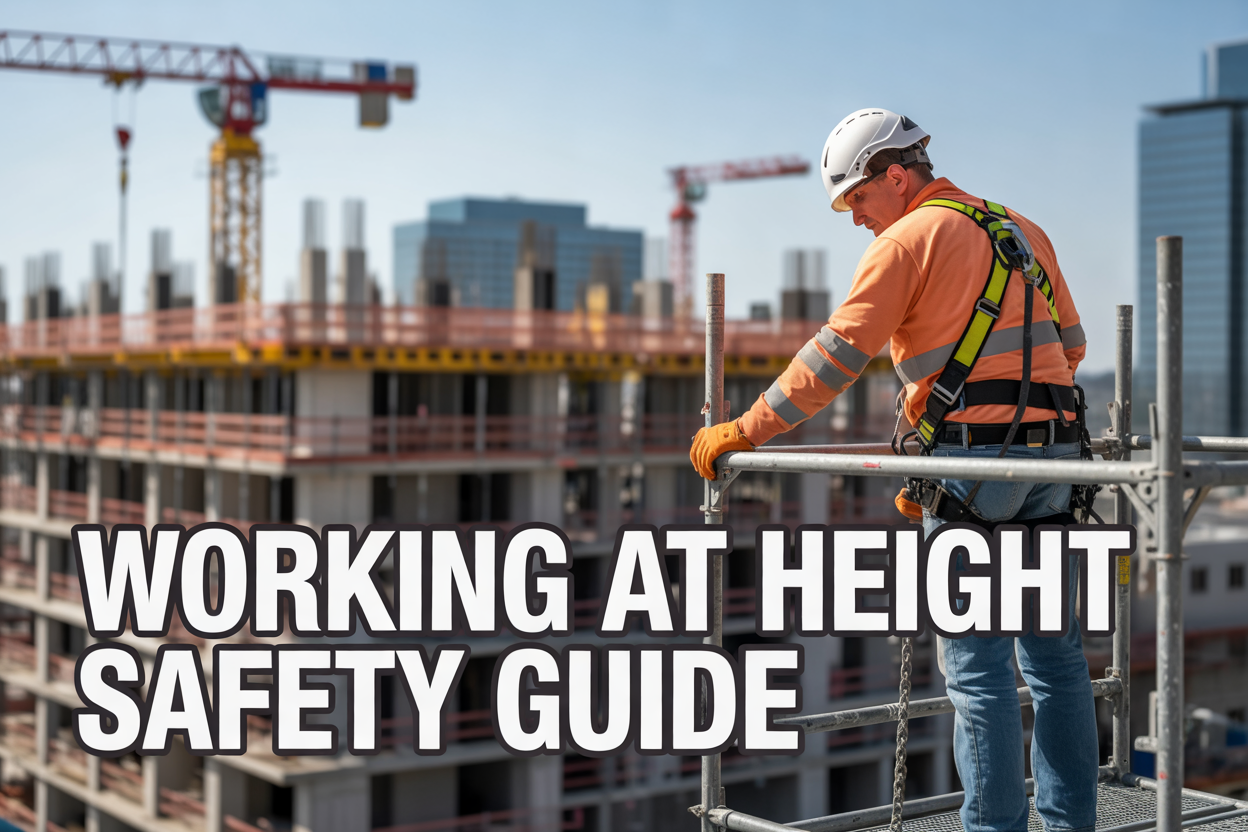
Falls from height remain the single biggest killer on UK construction sites. If you manage a team, run a site, or simply want to make sure everyone goes home safe at the end of the day, this guide is written for you — site managers, safety officers, contractors, and anyone responsible for working at height safety on a construction project.
Inside, you’ll find a straightforward breakdown of the height safety regulations UK sites must follow, a practical walk-through of risk assessment working at height so you know exactly what to check before a single tool leaves the ground, and clear guidance on fall protection equipment and scaffold safety guidelines that actually work in the real world.
No jargon, no fluff — just the stuff you need to stay compliant, protect your crew, and manage your construction site safely from top to bottom.
Understanding the Risks of Working at Height

Common Causes of Falls on Construction Sites
Falls from height remain the single biggest killer in UK construction. The most frequent triggers include:
- Unsecured or missing edge protection on roofs, platforms, and floor openings
- Improper scaffold assembly — missing boards, loose fittings, or overloaded platforms
- Fragile surfaces like roofing sheets and skylights that give way without warning
- Misuse of ladders — wrong angle, wrong type, or using them as a work platform
- Poor housekeeping — tools and debris creating trip hazards at height
The Human and Financial Cost of Height-Related Accidents
Beyond the devastating personal impact — life-changing injuries, fatalities, and trauma for families — the financial burden is enormous. A single serious fall can cost a business hundreds of thousands of pounds through compensation claims, investigation costs, project delays, and increased insurance premiums. HSE prosecutions regularly result in six-figure fines.
Why Construction Workers Are Especially Vulnerable
Construction environments are constantly changing. Unlike fixed workplaces, sites present shifting hazards daily — new openings appear, scaffold progresses, weather conditions change. Workers often face:
- Time pressure pushing shortcuts
- Varying skill levels across subcontractors
- Inconsistent working at height training standards
- Multiple trades working simultaneously at different levels
This combination makes robust construction site safety management absolutely critical.
Key Legal Requirements Every Site Manager Must Know

Working at Height Regulations and What They Mean for You
The Work at Height Regulations 2005 apply to all work where a fall could cause personal injury — including construction sites. They require employers to:
- Avoid work at height where possible
- Use the right equipment when it can’t be avoided
- Take steps to minimise the consequences of a fall
These aren’t suggestions. They’re legal obligations under height safety regulations UK law.
Employer Responsibilities Under Health and Safety Law
As a site manager, you’re responsible for:
- Conducting a risk assessment for working at height before any task begins
- Providing appropriate fall protection equipment for construction workers
- Ensuring equipment is inspected and properly maintained
- Organising working at height training for all relevant staff
Worker Rights and Duties When Working at Height
Workers have the right to a safe environment — but they also carry responsibilities:
- Follow safe systems of work
- Use provided equipment correctly
- Report hazards or defects immediately
Consequences of Non-Compliance
Ignoring WAH regulations compliance can be costly:
| Consequence | Detail |
|---|---|
| Improvement Notices | Issued by HSE inspectors |
| Prohibition Notices | Work stops immediately |
| Prosecution | Unlimited fines or imprisonment |
| Civil Claims | Workers can sue for damages |
Essential Risk Assessment Steps Before Starting Work

How to Identify and Evaluate Height-Related Hazards
A solid risk assessment for working at height starts with a proper site walkthrough. Look for:
- Fragile surfaces – skylights, older roofing sheets, or unsupported panels
- Unprotected edges – open floor voids, flat roof perimeters, stairwells
- Unstable ground – affects scaffold base stability and ladder placement
- Overhead hazards – power lines, falling objects from above
- Weather exposure – wind, rain, and ice significantly increase fall risk
Rate each hazard by likelihood and severity, then document your findings clearly.
Determining Which Tasks Require a Formal Risk Assessment
Under UK WAH Regulations compliance rules, any work where a fall could cause injury needs a written assessment. This includes:
| Task Type | Formal Assessment Required? |
|---|---|
| Scaffold erection/dismantling | Yes |
| Roof work (any height) | Yes |
| Ladder use for short-duration tasks | Yes |
| Work on MEWPs | Yes |
Involving Workers in the Risk Assessment Process
Workers doing the actual job often spot hazards that desk-based assessors miss. Bring them into the process early — ask about awkward access points, equipment limitations, and past near-misses. This not only sharpens the assessment but builds genuine buy-in for the construction site safety management controls you put in place.
Choosing the Right Equipment for Every Job

Ladders vs Scaffolding vs Elevated Work Platforms
| Equipment | Best For | Key Limitation |
|---|---|---|
| Ladders | Short-duration, light tasks | No hands-free working |
| Scaffolding | Extended work, multiple trades | Setup time and cost |
| EWPs/MEWPs | Flexible access, varied heights | Ground conditions required |
Picking the wrong equipment is one of the most common working at height safety mistakes on site. Always match the tool to the task, not to what’s easiest to grab.
How to Select Fall Arrest and Fall Restraint Systems
Fall restraint stops workers reaching a fall edge. Fall arrest catches them after a fall begins. Restraint is always the better starting point. When selecting fall protection equipment for construction, check anchorage strength, harness compatibility, and rescue planning before work starts.
Key Factors to Consider When Hiring or Buying Equipment
- Manufacturer inspection records and service history
- Compliance with current height safety regulations UK standards
- Weight load ratings relative to your workers and tools
- Availability of compatible PPE
Matching Equipment Choices to Site Conditions
Ground stability, weather exposure, and overhead obstructions all affect which equipment actually works safely. A MEWP perfect for open ground becomes a liability on soft or uneven terrain. Always walk the site before finalising your equipment plan.
Best Practices for Safe Scaffold Use on Site

Setting Up Scaffolding Correctly to Prevent Collapse
Poor erection is the leading cause of scaffold collapse. Always use a competent, trained scaffold contractor and follow the designer’s specification. Key steps include:
- Level and compact ground before placing base plates
- Use sole boards to distribute load evenly
- Tie scaffolding to the building at correct intervals
- Never omit guardrails, toeboards, or bracing
Daily Inspection Routines That Catch Problems Early
Scaffold safety guidelines require a formal inspection before each working shift. Check for:
- Loose or missing fittings and couplers
- Damaged or missing boards
- Unauthorised alterations overnight
- Signs of settlement or movement at base level
Safe Loading Limits and How to Avoid Overloading
Every scaffold has a rated load class. Exceeding it risks collapse.
| Load Class | Max Load (kg/m²) | Typical Use |
|---|---|---|
| 2 | 150 | Inspection work |
| 3 | 200 | General building |
| 4 | 300 | Heavy masonry |
Spread materials evenly and never stack directly above a single standard.
Managing Public Safety Around Scaffold Structures
Use solid fans, debris netting, and clearly signed exclusion zones to protect pedestrians beneath scaffold structures.
When to Stop Work and Report a Scaffold Concern
If something looks wrong — stop immediately. Report any movement, damage, or unauthorised changes to your site manager before anyone climbs the structure again.
Related articles:
Keeping Workers Safe Through Training and Supervision

Must-Have Training Certifications for Height Work
Working at height training isn’t optional — it’s a legal baseline under UK WAH regulations. Key certifications your team should hold include:
- PASMA – for mobile scaffold tower erection and use
- IPAF – for powered access platforms (MEWPs)
- CISRS – for scaffolders at operative and advanced levels
- CITB Site Safety Plus – broad construction safety awareness
Refresher training every 3–5 years keeps skills current and maintains compliance with height safety regulations UK-wide.
How Effective Supervision Reduces On-Site Accidents
Good supervision catches problems before they become incidents. A competent supervisor on-site should:
- Conduct daily briefings before height work begins
- Check equipment setup against the risk assessment
- Stop unsafe work without hesitation
- Document observations to spot repeat issues
Construction site safety management data consistently shows that sites with active, visible supervision have significantly fewer fall-related incidents.
Building a Safety-First Culture Across Your Team
Culture shapes behaviour more than any rulebook. Practical ways to embed working at height safety into daily habits:
- Celebrate near-miss reporting — it’s valuable intelligence
- Lead by example at every level of management
- Make safety conversations normal, not just reactive
- Involve workers in reviewing fall protection procedures
Practical Strategies to Prevent Falls Before They Happen

Using Guardrails and Edge Protection Effectively
Guardrails are your first line of defence against falls. Fix them at 950mm minimum height with a mid-rail and toeboard to stop both people and falling objects. Never remove edge protection mid-task — even briefly. If a section needs temporary removal, have a spotter present and replace it immediately.
Maintaining Clean and Clear Work Areas at Height
Cluttered platforms cause trips that turn into falls. Keep these habits consistent:
- Remove off-cuts, tools, and packaging as you go
- Never store materials near platform edges
- Check that walkways stay clear between tasks
- Wipe up spills, mud, or wet surfaces straight away
Construction site fall prevention starts with the basics — a tidy platform is a safer platform.
Planning Safe Access and Egress Routes
Before work starts, map out how workers get up and come back down safely. Fixed ladders, stair towers, and dedicated access points should be clearly marked. Never use the structure itself as an access route unless it’s been specifically assessed.
How Weather Conditions Affect Height Safety Decisions
Weather can change a safe platform into a dangerous one fast.
| Condition | Action |
|---|---|
| High winds (above 17mph) | Suspend work at height |
| Rain/ice | Inspect surfaces before use |
| Low visibility | Delay work until conditions improve |
Always reassess working at height safety when conditions shift during the day.
References and resources

Official Guidance and Legislation
- Work at Height Regulations 2005 – The core legal framework for WAH regulations compliance in the UK
- HSE: Working at Height – Practical guidance on height safety regulations UK, including risk assessment working at height tools
- HSE: Construction Industry – Broader construction site safety management resources
Industry Standards and Best Practice Guides
- NASC Guidance Documents – Scaffold safety guidelines and technical resources from the National Access & Scaffolding Confederation
- PASMA Training and Resources – Mobile access tower training and working at height training materials
- IPAF Safety Resources – Fall protection equipment construction guidance for powered access platforms
Further Reading
- HSE: Top Tips for Ladder Safety – Quick practical checklist for construction site fall prevention
- CITB Health and Safety Resources – Training support specifically for construction teams
- British Standards Institution (BSI) – Standards relevant to height safety best practices and equipment specifications
Conclusion
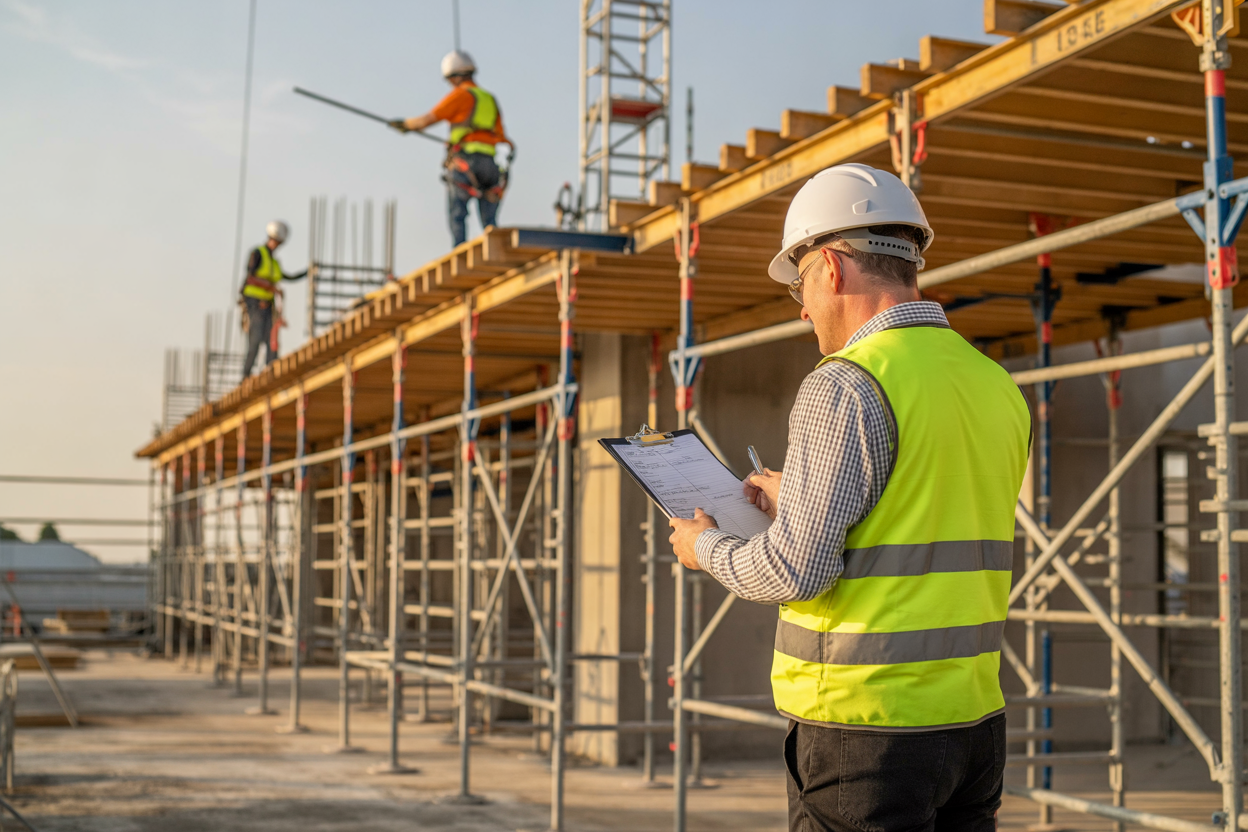
Working at height will always carry risks, but those risks become manageable when the right steps are taken. From understanding the hazards and meeting legal requirements to choosing the right equipment and running proper training, every layer of preparation adds another level of protection for your team. A solid risk assessment before work begins, combined with well-maintained scaffolding and consistent supervision, can make the difference between a safe workday and a serious incident.
The bottom line is simple — don’t wait for a near-miss to tighten up your approach. Take what you’ve learned here, walk your site with fresh eyes, and start filling any gaps in your safety setup today. Your crew is counting on it.